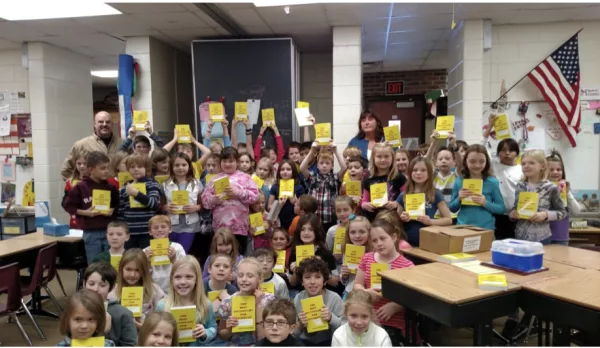
Distribution Day Ideas & Presentation Guide
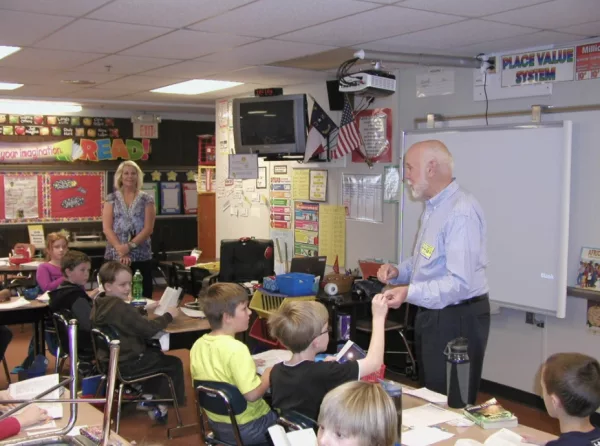
Presenting Dictionaries to Students
When visiting with students, let them know that you are interested in their education and want to see them succeed. The goal is to make the experience positive, encouraging, and memorable.
What If There Are Dictionaries Left Over?
Because dictionaries must often be ordered by the case, sponsors may occasionally have extra books remaining after distributions.
While the primary goal is to place dictionaries into the hands of elementary school students, these books can also benefit many others. Sponsors may consider donating remaining dictionaries to:
- ESOL (English for Speakers of Other Languages) programs in middle or high schools
- Adult literacy programs
- Educational programs within correctional facilities
- Homeschool groups
- Schools for future students arriving later in the year
Leaving a few extra dictionaries at participating schools is always appreciated.
Distribution Day
So you have scheduled a delivery date with the school. The teachers are expecting you, and all of your hard work is about to pay off — it must be Distribution Day!
First Step
Please check in at the school office upon arrival.
Presentation Suggestions
- Speak clearly and make eye contact with the students.
- Only call on students who raise their hands.
- Wait until students are quiet before continuing.
- Be enthusiastic. Students are receiving their very own personal dictionary to take home, share with their families, and use for schoolwork.
- Keep the presentation brief — approximately 10 to 15 minutes.
The purpose of the presentation is to help students become excited about using a dictionary and learning new words.
How to Present the Dictionaries
The power of the gift is in the giving. Volunteers generously take time from their schedules to personally visit schools and classrooms.
Introduce Yourself
Write your name on the board and briefly explain your organization and its goals. Personalize the experience by sharing why you became involved.
What Is a Dictionary?
Explain what a dictionary is and how students can use it both in school and at home. Let students know that you and your organization want to see them succeed in school and in life.
Distribute the Dictionaries
Ask students to write their first and last name inside their dictionary.
Why Do People Use Dictionaries?
Explain that strong reading, writing, and communication skills are important throughout life and in the professional world. A strong command of language helps people become more successful.
You may also wish to share a personal story or experience.
Key Features of a Dictionary
- Explain that words are listed in alphabetical order.
- Demonstrate how to look up a word by sounding out the first few letters.
- As a class, look up a sample word together.
- Show students how to identify:
- Pronunciation
- Spelling
- Part of speech
- Definition
You can also explain that some words have multiple meanings. For example:
- “Right” can mean the opposite of left, or the opposite of wrong.
- Homophones are words that sound alike but are spelled differently, such as “write” and “right.”
Encourage students to suggest additional examples.
Play a Dictionary Game
Practice dictionary skills by turning the activity into a game.
- Give students a word to find.
- Have a race to see who can locate the word first.
- Ask students for:
- The page number
- The correct spelling
- The definition
- Challenge students to use the word in a sentence.
If your dictionaries include supplemental reference sections in the back, use them as part of the activity.
Example questions:
- Who was the president in 1860?
- What is the capital of Connecticut?
- How do you pronounce the longest word?
Closing
Thank the students and their teacher for allowing you to visit their classroom.
You may also wish to leave worksheets or activities that teachers can use later to continue practicing dictionary skills.